Different Tournaments

In karate you compete in tournaments instead of “games” like a lot of sports. They’re are plenty of different tournaments and it also depeneds on where you live.

Inner Dojo

The younger kids that are in the traditional classes still learn some competitive karate because it is a fun thing to do. The younger kids will take their skills and compete at a tournament just within the dojo to get the experience and to have a fun day. My first tournament was an inner dojo and after it I knew I wanted to just do competitive. When my dojo has a tournament I usually help the kids get ready because I am one of their regular coaches, or I will help ref them which is really fun.

Yuujou

The yuujou tournaments do not happen anymore but when I was younger these tournaments was my first taste of a real tournament with kids from a different dojo. These tournaments were competed in by three different dojos, mine (HMA), ISK, and RSK. The sensei of the three dojos competed on team Canada with each other when they were younger and the sensei of RSK is the team Canada senior coach.

TKKO

The TKKO is a tournament that used to be held every few months and was a really good tournament for any rec kid because it gives good experience to start getting ready for bigger tournaments. To my knowledge the organizations have stopped having these tournaments because they did not have enough money to rent out the space.

Karate Ontario

Three years ago there was still Karate Ontario, the organization for tournaments in Ontario and the section tournaments for Team Ontario. I competed as a recreational athlete for these tournaments. This organization was around for a long time but collapsed and went bankrupt.

OKF

The OKF or Ontario Karate federation is the new organization for karate in Ontario. There are usually four or five of the tournaments in a year all in the and they are very important. These tournaments are the selection process to make it onto team Ontario. I first started compete in elite at an OKF tournament and that was such a great experience. I also got to be on team Ontario and go to nationals and make it onto the roster for team Canada. The way you make it on to team Ontario is that you are in the top three for kumite and top four for kata. You can get in these places by meddling. This year I was not able to compete because of injuries but I still got to help coach the younger kids.

Nationals

Once you are on team Ontario you will start to have team training’s every two weeks to get ready for nationals which is a tournament for all of Canada. This tournament is a very stressful one. The atmosphere is very intense and fun. You will go up against people in your division from any of the different provinces. It is usually a three day tournament with matches going from 8 Am to 3 Pm each day. If you place at this tournament you will get to be on the Team Canada roster is which how you get to compete at Pan Ams. Once you are on team Canada you now have the chance to go to all of the team training and the “camps”. I was not able to compete at Pan Ams because I aged out and was too old for my age category.
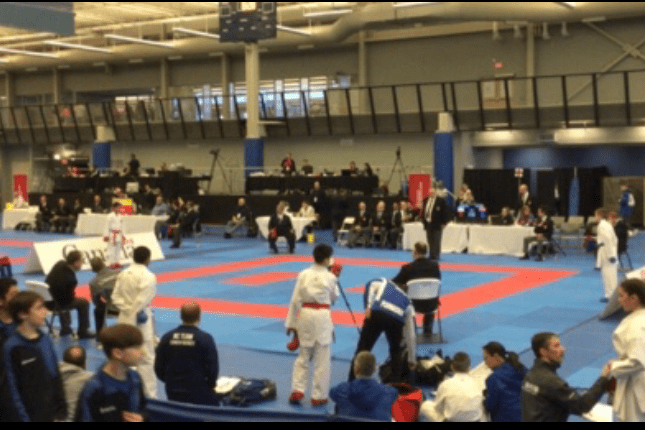
Picture of nationals.

In conclusion there are many different tournaments to compete at and many different pathways for different competitors to take.
Competitive or Traditional

In karate there are the two main types of karate, either the traditional karate dating back to Japan a very long time ago, or the sport karate which has evolved a lot since it has first started off.

Traditional

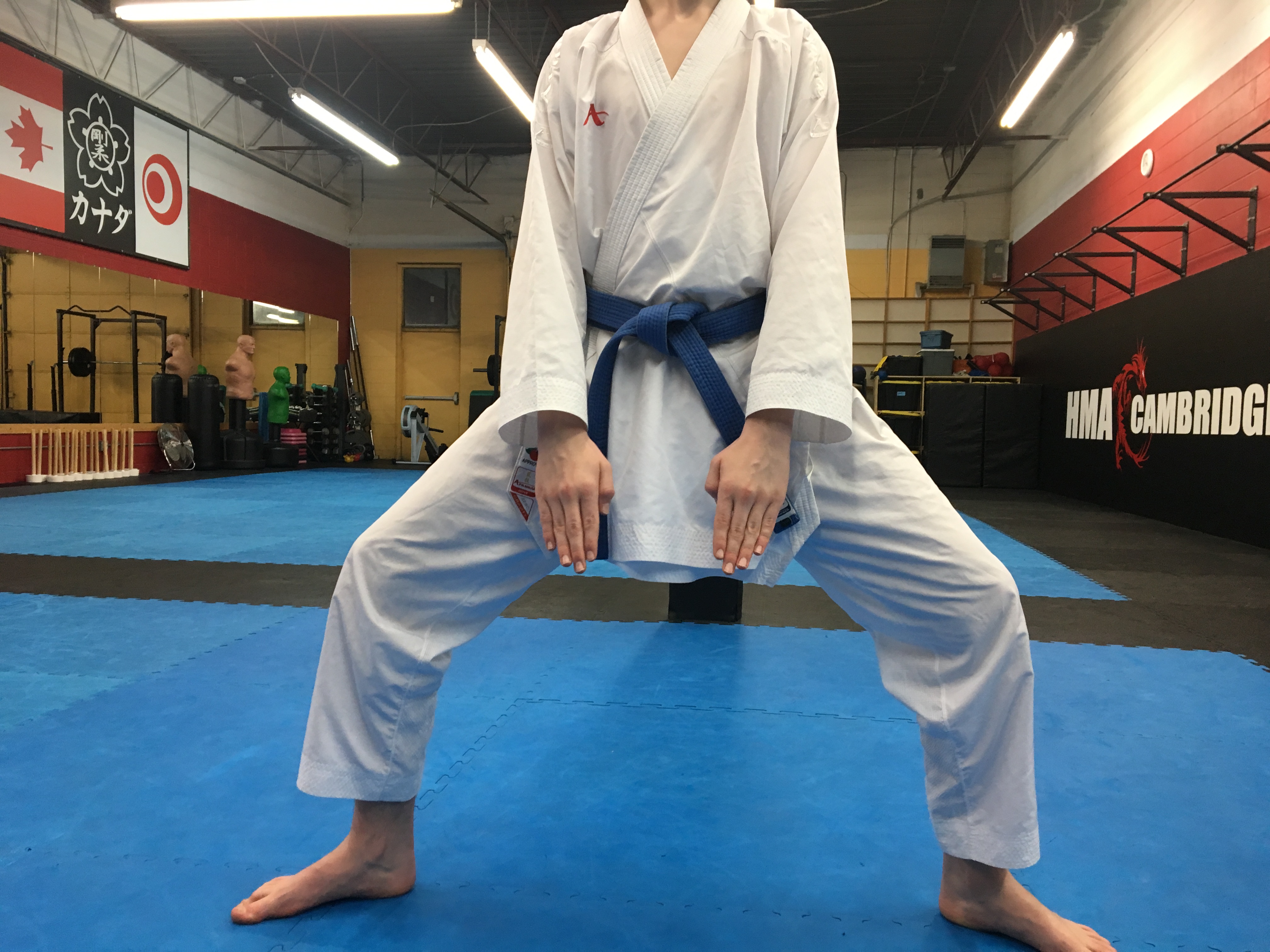
Traditional karate is the route of all karate and is what you will do when you first start off. There are many different styles of Traditional karate …

  • Goju-Ryu
  • Shito-Ryu
  • Shotokan

There are many more but those are the main three in Ontario. The style of karate that I do is Goju-Ryu and it stands for open handed way, meaning we don not use weapons. The reasons you would want to do traditional karate is to get stronger and to be able to stand up to bullies or getting mugged. Traditional karate is from Okinawa, a Japan prefecture where a long time ago they would use karate to defend their village from attackers.

In traditional karate you learn self defense, kata, and you will also learn kihon ido which is basics with movement.

Self Defense

Self defense teaches you how to get out of someone grabbing you, and how to hurt them. You learn how to get out of all different grips like wrist grip, shoulder, jacket, behind shoulders, bear hugs, and head lock to list some. The four basic steps to get out of some holding are, stance, kick, elbow, take down/strike.

Kata

Even though there is kata in competitive karate, you will still learn kata if you’re doing traditional karate. Even though I do not do kata anymore I know the traditional kata is different from competitive karate. Most of it is the same but they’re all just some small differences. Kata teaches you more ways to fend off people coming at you.

Andrew (me) doing a traditional kata.

Kihon Ido

Kihon ido is doing your basics with a stance while moving forward and backwards. When I am coaching the younger kids they usually do this. The techniques they use are

  • high punch
  • middle punch
  • low punch
  • back fist
  • elbow
  • high blocks
  • middle blocks
  • open handed middle blocks
  • low block

Competitive

Competitive karate is going to be a sport in the 2020 Olympics and has its own international circuit the K1. In the sport of karate you compete at a tournament against other people. Competitive karate is divided between two different branches, kumite and kata.

Kata

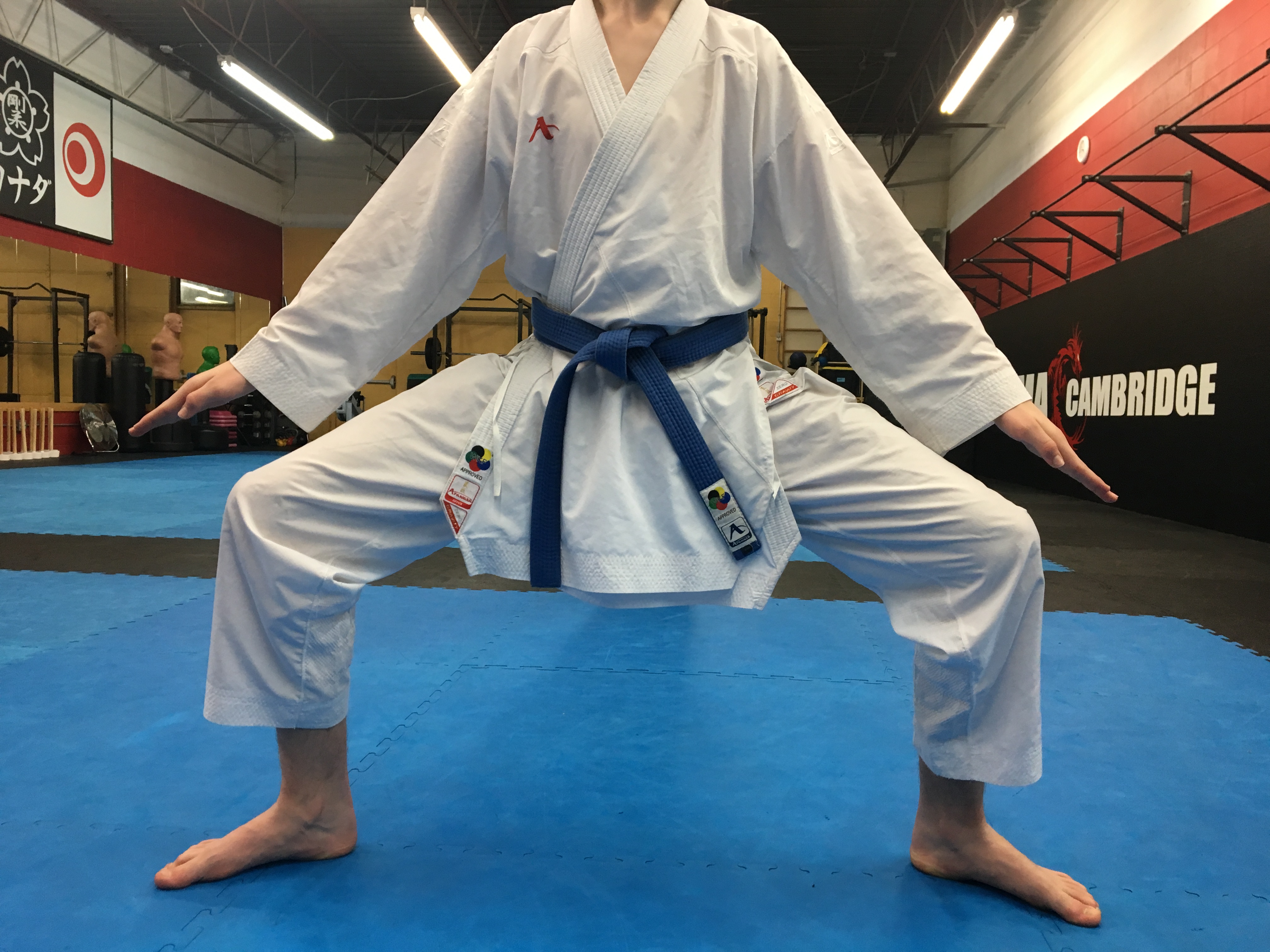
Kata is a pattern of moves to show a “story” of fight. In kata you will present your kata in front of 5 judges who will come up with a score based on your stance and power. The refs will then take the top two scores and the bottom to scores then add them together to get your score. A lot of people like kata and find it fun to compete in but I do not do it anymore because I was not the best at it and I found it kinda boring.

Andrew (me) doing he same kata as before but in the competitive style.

Kumite

Kumite (sparing) is a fast paced style of karate. In kumite you use techniques like jab and reverse punch, body kick, head kick and more. Kumite is a point based sport where you are trying to hit a targeted area with proper technique to score points. There is a ref at each corner and a head ref at the front of the ring who gives the points as wells as the different fouls. I think that kumite is really fun and fast paced as well as more competitive than kata.

In conclusion I hope I have given you reasons why to choose either traditional karate or competitive karate. If you choose either one it will be a good way to learn new things.

All the Equipment

Who wants to get punched kicked and all bruised up, I don’t think anyone does but I know that I definitely don’t want to. With the main point of karate is a fast paced fight not based on knocking out your opponent there is different gear to attack you and the person your sparing. You need to where the proper gear in your match or else you’re going to disqualified and wont be able to fight.

Gi

In karate you can not do anything without your gi. Imagine showing up to school without clothes on, that’s like being in a match without a gi. There are many different types of gis though, it all depends on what type of karate you are doing.

Traditional Gi

If you are just doing traditional karate you would need a heavier gi but not a super stiff one, and you would want it to be comfortable.

Kata Gi

Then if you are a kata athlete you would need a gi for that. Kata gis are very heavy and stiff and make sounds when you move around to sound stronger.

Kumite Gi

Then there is a kumite gi. Kumite gis are the most comfortable thing ever in my opinion. I have the onyx zero grav and it feels like I’m not wearing anything. It is so easy to move around in that you feel like your moving really fast.

Belts

In competitive karate there are two different colour that you’re gear and belt would be, either blue or red. In a match their are the two colour so it is easier for the refs to decide who gets the point. However if you’re just doing traditional karate your belt colour can range from white to black. I am currently a brown belt but am starting to train to get my black belt.

Gloves

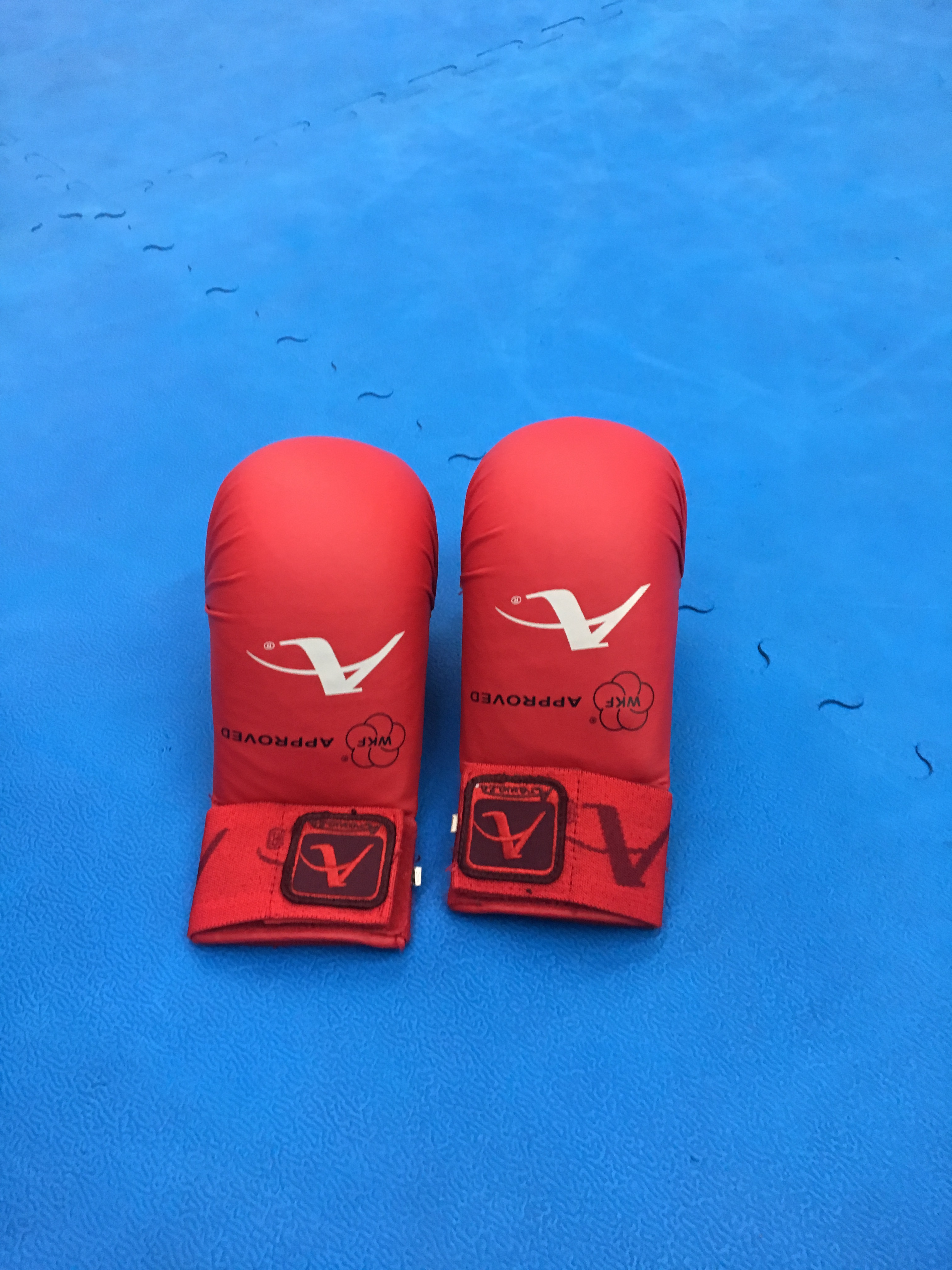
The next most important thing in karate is your gloves. Your gloves are like an extension to your arm, the add about an inch. The gloves are very important when you are sparing someone so you don’t not hurt them and get a penalty for injuring who you’re fighting.

A pair of red gloves.

Shin Guards

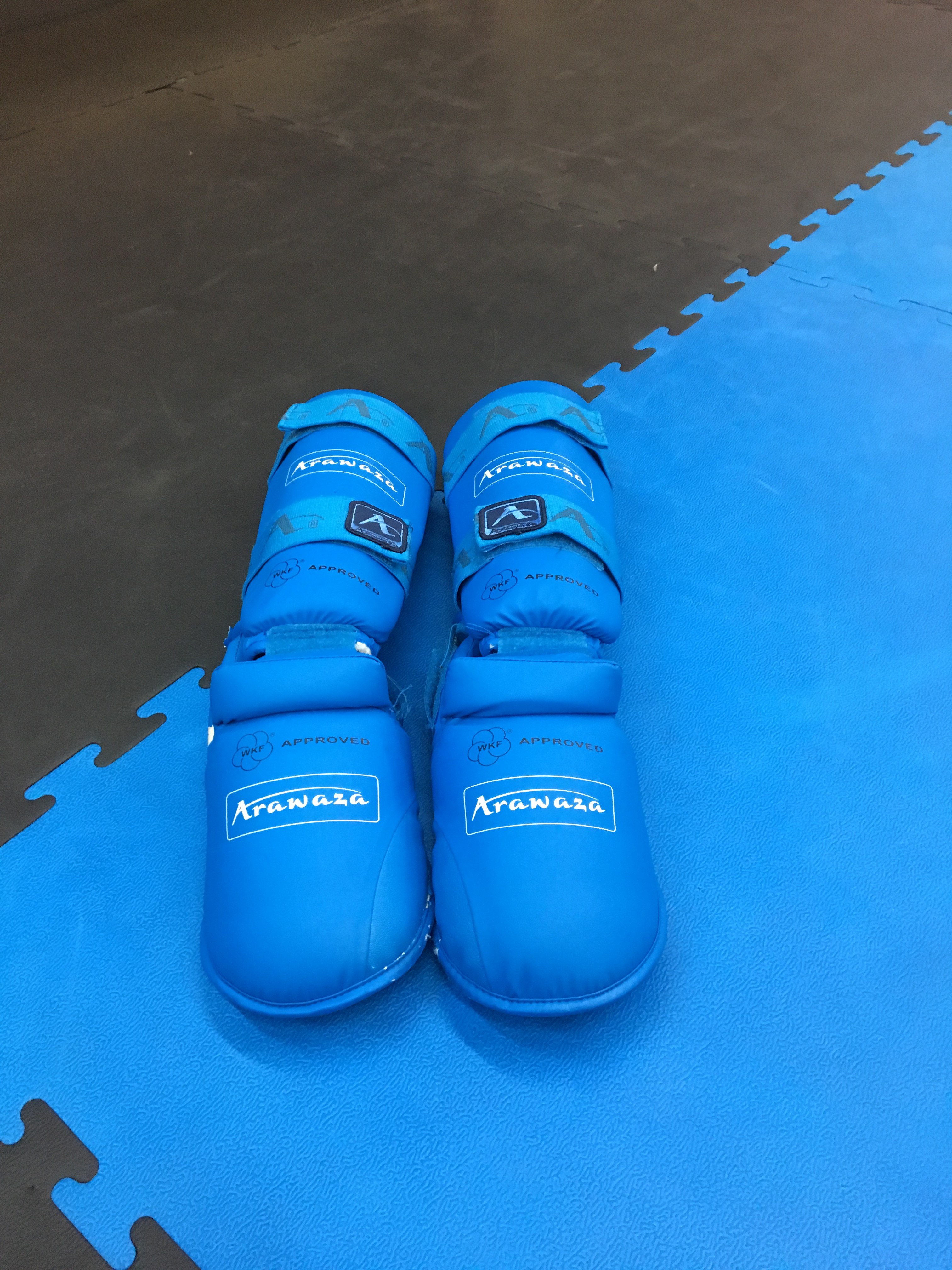
The shin guards are important to karate so you wont hurt people when your kicking them, or hurt yourself when you hit them. You need shinguard or else you will get disqualified just like any other gear.

A set of blue shin pads.

Mouth Guard

Mouth guards a re very important to any sport to make sure your teeth don’t get hurt. In karate you need a mouth guard so if someone accidentally punches you in the mouth a tooth won’t come flying out. Another use for the mouth guard is to make sure your teeth wont cut your lips. This happened to me one time when I didn’t wear mine and blood went everywhere so ow I make sure I always where my mouth guard.

Chest guard

The chest guard is very important when you’re fighting people so if you get punched hard you wont get winded and it will take some of the pain away. The chest guards are very padded and honestly make you look kinda bigger than you are, and very intimidating.

Different Gender Gear

Karate is like most sports where the guys and girls don’t compete against each other. If are competing as a male you need a jock strap to to keep the family jewels in place. Where as if you are competing as a girl you need a breast plate, even though you already have the chest guard.

In conclusion you need all of the different types of gear in karate to compete in your match and not get disqualified.

Main Kicks

Karate is fast paced and very quick, and to keep up you will need more than just punches. There are three main Main kicks in the competitive sport that most athletes use. There is the body round kick, a head round kick and a hook kick.

Some beginner tips

Before you start your kicks you need to make sure you have a proper stance. You want to have your foot planted so you won’t fall over or swept. Next you want to be able to balance on the foot you’re not kicking on so you don’t want to make yourself fall over. You also want to be able yo bring your knee up past your hip so you can hit your target

1. Body kick

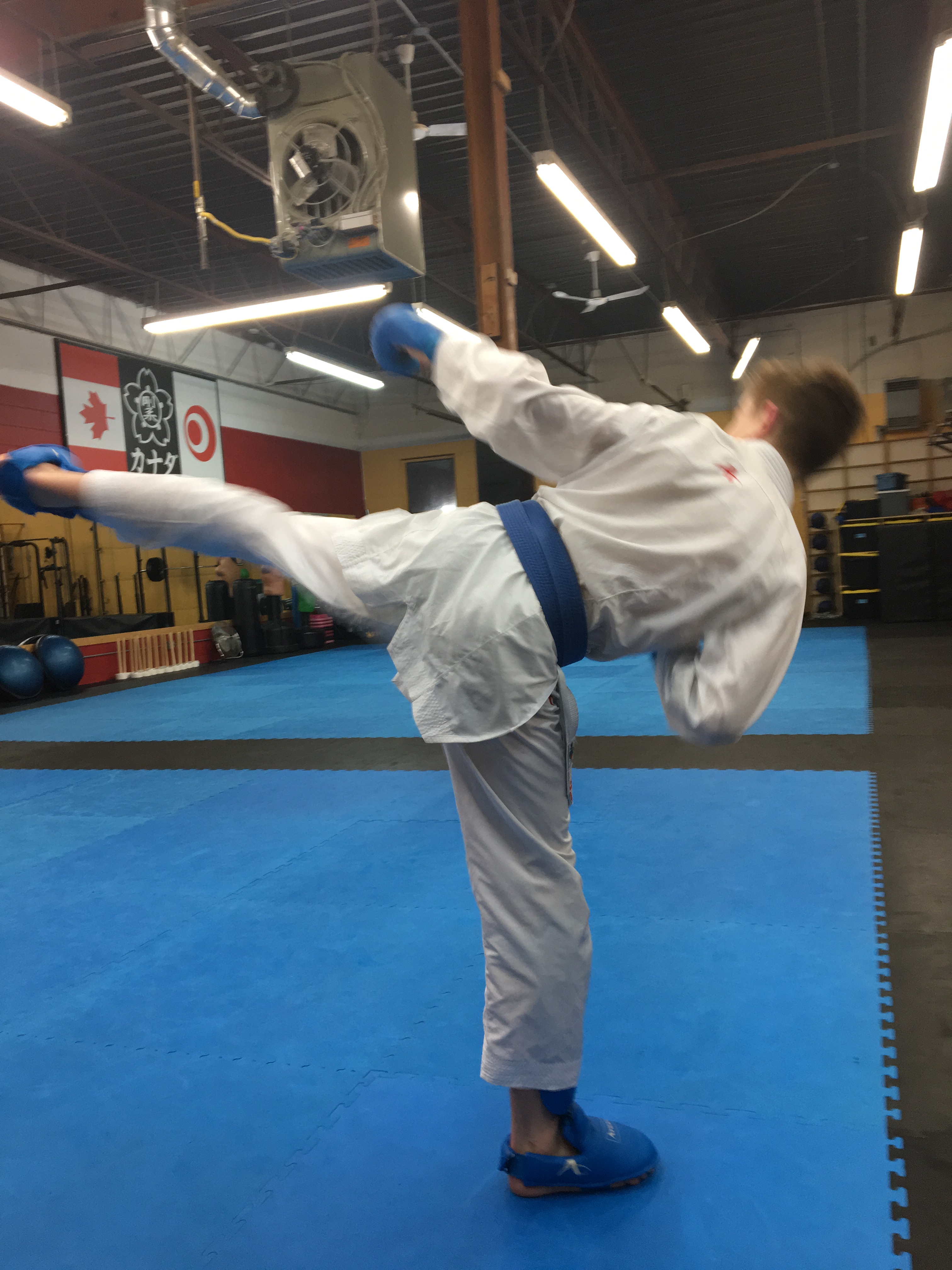
The Body kick is the most used kick in karate. It is a round kick to the body using either leg whether its front or back leg. You need to lift your knee up to around your hip and extend out your leg to hit your opponents body. The body kick scores two points and you can easily control a match if you have a great body kick.

Andrew (me) doing a kick.

2. Head kick

A head kick is just like a body kick but to the head. You use all of the same techniques and you can use either legs to hit the head. When you head kick you need to lift your knee up a bit higher to hit your target. When kicking the head you need to make sure you do not hit your opponents head or you will get a foul. A head kick scores 3 points but is usually slower and harder to score.

3. Hook kick

The kick is not like the other two kicks, it is more difficult to score but harder for your opponent to block if it is good. When you hook kick you need to bring your knee up high and angle your body back. The bottom of your foot has to hit its reverse side of the head of the leg your kicking with. The reason it is called a hook kick is that when you kick it looks like a hook with the back of you’re leg. My favourite kick is the hook because I feel that you can use it in different times, like timing or just take control of the match.

4. Side Kick

The side kick is not used as much as the other kicks but it is still very useful. If you are winning a match and need to keep your opponent away from you in the last seconds. This kick is any easy one all you need to do is bring your knee up and extend it to the side like you a re pushing something away.

In conclusion the four main kicks are the body kick, head kick, hook kick, and a side kick. You use each one at a different time for a different reason and if you’re good at any of them you can take charge of the match.

Two Most Used Punches

Competitive karate might not be a well known sport but its a fun on. Once you have started to work competitive karate you will definitely cover the two basic techniques a jab and a cross.

1. The Jab

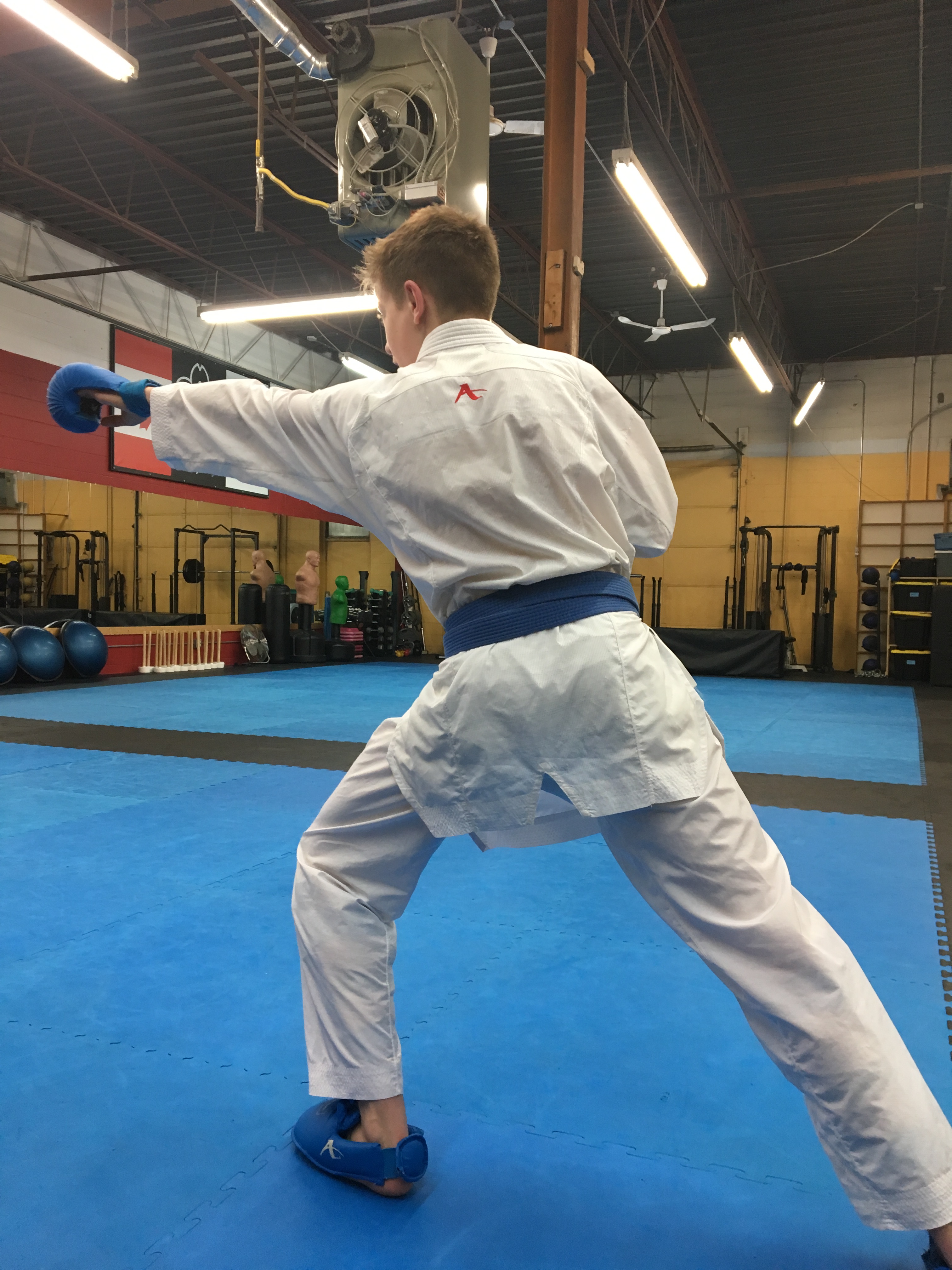
The jab is one of the first punches you will learn because it is the most basic. A jab is a punch with your lead hand. You will punch and step with your lead foot to the head but make sure not to hit their head because that will be a foul.

Andrew (Me) doing a jab

2. The Reverse Punch (Cross)

The reverse punch is a highly used technique in karate because you can get a lot of momentum from it. A reverse punch is when you punch with your hand that is not forward and you can either hit your opponent in the head or not. The best thing about the reverse punch is that there are different ways to use it.

1. Body Cross

The main way someone would use a reverse punch is to the body. you can get enough power from moving in and turning your body like it is an elastic to get the power.

2. Head Cross

The head cross is just like the body cross but the target is the head. This technique is not used as much because it is a bit more awkward.

3. Timing

In karate a good timing punch is really good. It is when someone is coming in to score on you and you time them so right when they’re at a good distance you attack. The most common way of doing this is with your reverse punch, because it is the fastest.

Andrew (me) doing a reverse punch.

Those are the two main punches in karate that you would learn first and to keep you ahead in your matches as well.